
The Math Is Not Mathing | The Real Economics of Independent Filmmaking
The Real Economics of Filmmaking

The Math Is Not Mathing: The Real Economics of Filmmaking
If you’ve never heard the phrase “the math is not mathing,” it’s basically a funny way people describe situations where the numbers are not adding up the way people expect them to. The spending, the effort, and the reality are not matching what people assume from the outside.
And honestly, that phrase perfectly captures much of what filmmakers and producers experience behind the scenes.
One thing I’ve learned while building a film studio is this: the audience sees the screen, but producers see the spreadsheet.
When people watch a movie, they naturally focus on what they can see: the actors, the fashion, the locations, the visual quality, the music, and the overall experience. But behind every scene lie financial and strategic decisions most audiences never consider.
As I continue building Lady Laide Studios and pursuing my vision of building a billion-dollar global media company without a blueprint, I’m learning in real time that filmmaking is both art and business. You cannot separate the two.
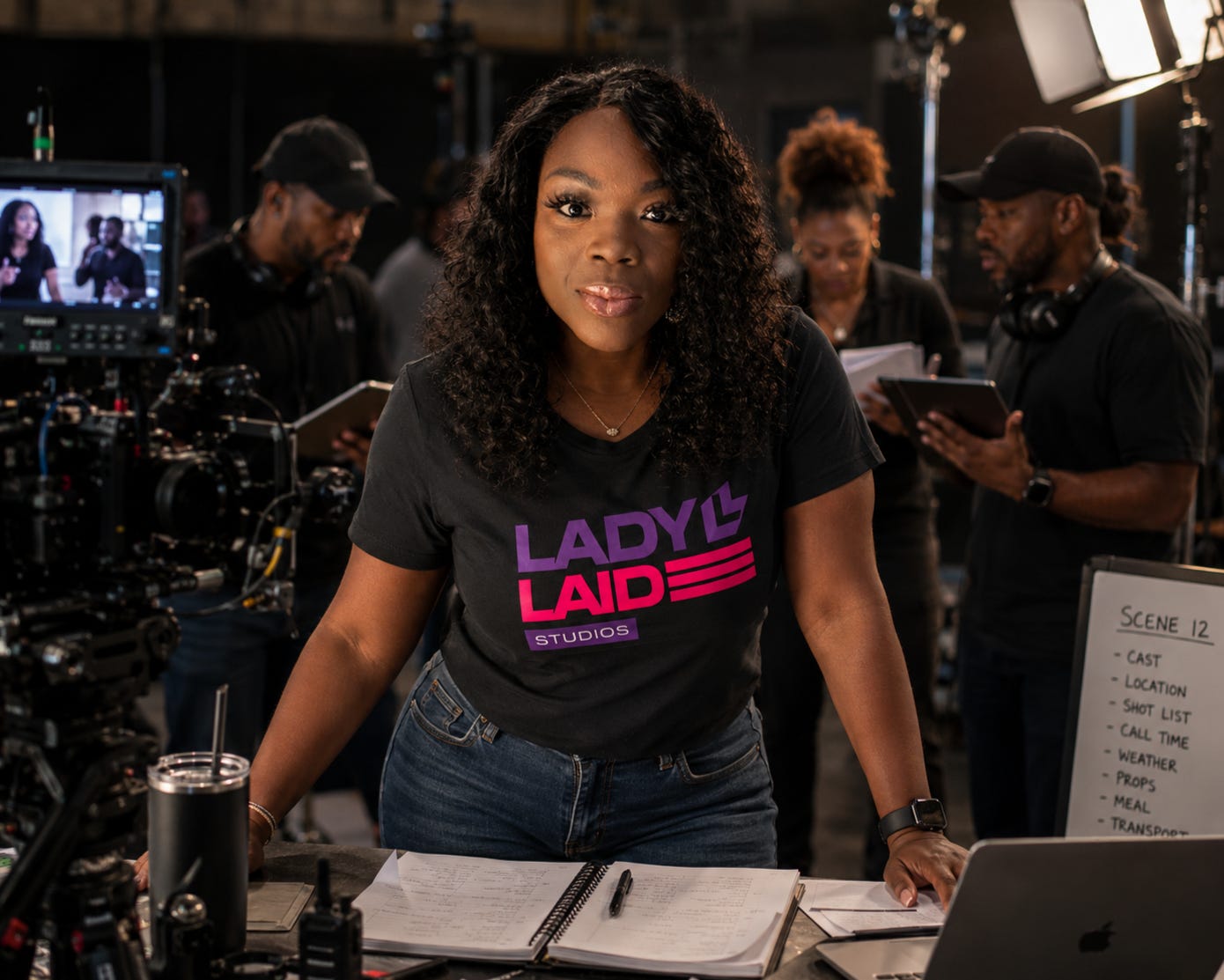
One of the biggest conversations happening in entertainment right now is money. Actors want to be paid fairly. Crew members want better rates. Audiences want higher-quality productions. Investors want returns. Producers are trying to build sustainably enough to continue creating consistently. And honestly, everybody has a valid point.
What many audiences don’t fully realize is that producers spend money long before a project ever reaches the screen. By the time a film gets to viewers, money has already gone into development, casting, locations, transportation, accommodation, feeding, wardrobe, makeup, editing, sound, marketing, PR, and distribution.
And unlike many traditional businesses, filmmaking is unpredictable. You can have a great script, a talented cast, and beautiful visuals, and still not know exactly how audiences will respond. That’s part of what makes this industry exciting, but also risky.
One thing that has surprised me while building in this industry is how quickly every “small” decision becomes expensive. A location affects transportation, accommodation, permits, security, and logistics. Adding more actors affects wardrobe, feeding, scheduling, transportation, and production days. Extending a shoot affects crew costs and equipment rentals. Everything connects to something else financially.
At the same time, audiences are demanding better-quality productions, which is honestly a good thing. We all want African cinema to continue growing globally. We want stronger stories, better visuals, and world-class productions. But quality requires infrastructure, systems, financing, and long-term business thinking.
Another thing I’m learning is how much the platform itself shapes the production. A YouTube film operates differently from a cinema release or a Netflix Original. Different platforms come with different audience expectations, budgets, marketing support, and revenue models. That affects everything from casting and production scale to post-production and distribution strategy.
And honestly, social media has created the illusion that visibility automatically means profitability. It doesn’t always work that way. A film can trend online and still require strong monetization and distribution systems behind it. That’s why serious producers think beyond just views and hype. They think about intellectual property, licensing, partnerships, international expansion, scalability, and long-term value.
Because filmmaking today is not just creativity.
It’s strategy.
One thing I deeply respect is hearing experienced filmmakers talk honestly about learning before leading. Production is not something people should rush into blindly. A lot of people see filmmaking from the outside and think, “I can produce,” or “I can open a channel,” or “I can make films.” But filmmaking is operations, logistics, financial management, people management, and problem-solving under pressure.
Before you produce, you need to understand story, audience, budgeting, distribution, marketing, and operations. You need to understand where the film is going before spending money making it.
And honestly, that lesson applies beyond filmmaking, too. Before leading, learn. Before scaling, study. Before expanding, understand the business.
One thing I promised this community is honesty about what it actually looks like to build a global studio in real time. And honestly, there is no blueprint. There is vision. There is strategy. There is learning. There is adaptation. There is risk. A lot of this journey involves figuring things out as you move forward.
The audience watches the final product for two hours, but producers can spend years building the systems that make those stories possible in the first place.
So the next time you watch a film, especially an independent production, I hope you look at it a little differently. Not just through the lens of entertainment, but through the lens of the people, decisions, sacrifices, and strategy that go into bringing a story to life.
The math may not always work perfectly in the early stages of building, but the opportunities in global storytelling are very real.
And for those of us building studios and pushing African storytelling onto bigger global stages, the goal is not just to make films.
The goal is to build lasting systems, global audiences, and valuable intellectual property that can grow for generations.
What part of the film economics equation surprises you the most, the cost of production or the complexity of platform distribution? Let’s talk about it in the comments.
Until next week,
Lady Laide
